_Sandwich_-_Dresden_-_Germany.jpg)

We have experience eating sandwiches and watching sports.
Wednesday, November 12, 2014
Mark Sanchez Likes Philly Sandwiches, and Other Sandwich and Sports Topics [Podcast]
Dhario and Harrison, along with a special correspondent, break down the latest in the NBA, NFL, German sandwiches, and chess--that, plus of course listener questions about sandwiches.


Friday, November 7, 2014
The Great Sandwich Episode [Podcast]
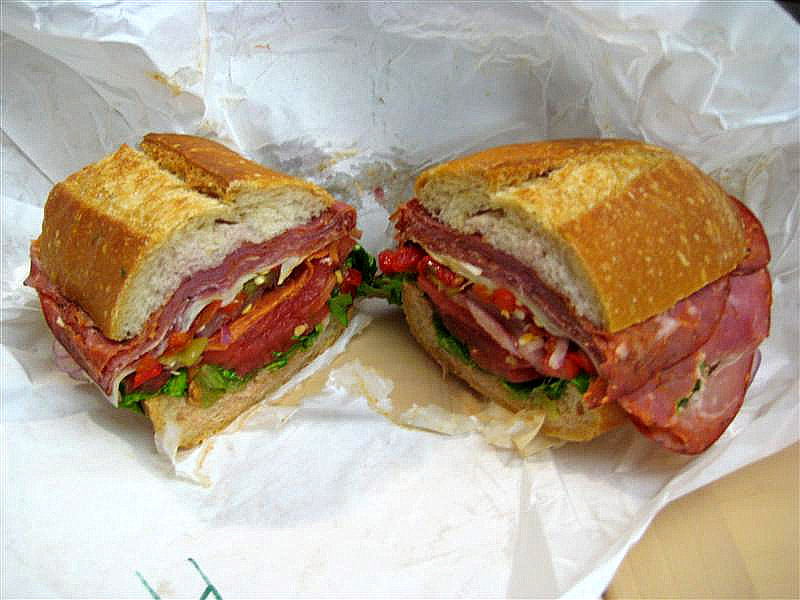
Ever wondered the proper etiquette for dealing with end pieces in a loaf of bread? Want to know the etymology of hoagie? Dhario and Harrison answer these questions, and many more, on this week's podcast!

Wednesday, October 8, 2014
Drinking Games and Power Rankings [Podcast]
For those of you who do not know, Harrison and I do a
weekly radio show (Wednesdays 7-8 PM at radiofords.com/listen). We'll try to
upload them in podcast form weekly to this site, as well as a transcript of some
of our juicier material. The podcast usually consists of a recap and analysis of the major sports, as well as a few more obscure ones. For details on this week's see the end of this post.
Drinking Game
Harrison's weekly off-the-cuff drinking game should be
played to Game 1 of the Royals-Orioles series (Friday at 8:00 PM). Drink every
time:
 1. Someone
sings (e.g. National Anthem, “Take Me Out to the Ball Game”)
1. Someone
sings (e.g. National Anthem, “Take Me Out to the Ball Game”)
2. Cameras
Zoom in on an Orioles’ fan wearing a funky orange costume
3. Cameras
Zoom in on a Royals’ fan wearing a funky blue costume
4. Foul
ball caught in the stands*
5. You
misunderstand the rules of baseball
6. The
announcers reference some complex baseball strategy you don’t understand
7. Scoring
opportunity that is not capitalized upon
8. The
team you arbitrarily pick to root for loses = finish drink
*You should do this
for every baseball game at every level, not just for this Weekly Drinking Game
Power Ranking
Harrison spouted off his top 10 favorite breads with no
previous knowledge that he would do this. The sure-to-engender controversy ranking:
10. Bunny Bread
9. Whole Wheat with way too many seeds in it
8. Dinner Rolls
7. Marble Rye
6. White Bread (regular)
5. Bread Bowls
4. Whole Wheat with a normal number of seeds in it
3. Honey Wheat
2. Sourdough
1. Pumpernickel

Podcast
This week we sorted the contenders from the pretenders in the NFL, bet the farm on a squash tournament, recapped some cricket, complained about Percy Harvin's lack of fantasy impact, and put Harrison on the spot a few times. Check it out!

Podcast
This week we sorted the contenders from the pretenders in the NFL, bet the farm on a squash tournament, recapped some cricket, complained about Percy Harvin's lack of fantasy impact, and put Harrison on the spot a few times. Check it out!
Monday, October 6, 2014
Jay Gruden Runs a Crappy Diner
Read this while eating: A ham and cheese sans cheese.
(See below)
“Zero faith in Jay
Gruden to even tie his shoelaces.” – Washington fan Josh L.
Imagine walking into your local sandwich restaurant and
having the following interaction with your waiter, played here by Washington
football coach Jay Gruden:
You: What sandwiches are good
today?
Jay Gruden: Grilled cheese is
always a great choice, in my opinion.
You: What kind of cheeses do you
have?
JG: Actually, I think we just ran
out of cheese.
You: You’re a sandwich store and
you ran out of every type of cheese?
JG: Unfortunately, but don’t worry,
we have tons of great sandwiches. Do you want a ham and cheese?
You: Sur—wait, didn’t you just say
you were out of cheeses?
JG: Oh, yeah, good point, I forgot.
How about a tuna sandwich?
You: Get me anything at this point.
JG: Would you like to upgrade to a
tuna melt for an extra dollar?
You: [Tries very hard not to punch
him while exiting premises]

Jay Gruden made a pretty confusing series of decisions
against the Seahawks on Monday Night
Football this week, which for the purpose of hyperbole I am going to call the single most frustrating and
mind-numbingly idiotic set of coaching decisions in my entire blogging
career!!!!!! At the beginning of the third quarter, Washington, down 17-7 to
the defending Super Bowl Champion Seattle Supersonics, faced 3rd
& 1 on the Seahawks’ 9. Kirk Cousins barely got the snap off on time en
route to trying a quarterback sneak that got stuffed for no gain. This was a
pretty tame play call, but one that might have worked if Cousins had had a
little more time to set up and pick his hole. (Whatever miscommunication
occurred on the field is most likely not attributable to Gurden). Down ten
points and needing three measly feet to get a fresh set of downs, Jay “Don’t
Call Me Jon” Gruden elected to kick a field goal, thus going down 17-10.
This decision is not that controversial, or at least not as
controversial as it should be. With few exceptions, coaches go with the safer
of two options. Calling the game, Gruden’s brother lauded the move, noting that
baby bro had taken the safe bet to keep the score within two possessions.
(Interestingly, Jon “I Won a Super Bowl So Who Cares If You’re Mom’s Favorite”
Gruden said he would think about going for it before his brother sent out the field goal unit.) It’s not
productive to criticize statements made by conservative broadcasters in the
heat of the moment…but it is a lot of
fun so here goes: The pro-kicking argument based on keeping the game within two
touchdowns is banal for two reasons. First, it was Washington’s first possession
of the third quarter. There’s no reason to play the score this early in the
game. Going down 17-10 is not much better than going down 17-7, as the Seahawks
only needed a field goal (or a safety) to stretch that lead to three
possessions—and they had 25 minutes of game time to do that. Second, kicking
essentially tells your defense: “Go win this game for us.” Washington obviously
needed to score a touchdown in order to tie the game, but they also needed to
stop the Seahawks immediately after this field goal in order to have the
opportunity to tie the game. Oh yeah, and also stop them every other time Seattle
had the ball with a 7-point lead. Considering Washington’s best defense was the
Seahawks committing penalties (including 3 TDs nullified in the game), I don’t
feel great about the chances of this happening.

Jay Gruden absolutely should have gone for it. Generally,
underdogs should play aggressively and favorites should play conservatively.
(This is all relative.) When your team isn’t as good, you need to make the game
higher-variance in order to win the game. Going for the first down—which, once
again, was only one yard away, Cousins and co. didn’t exactly need to cross the
Red Sea to pick it up—is a high-risk, high-reward strategy. Scratch that: it’s
a moderate-risk, high-reward strategy that could have potentially brought the
underdog to within a field goal. Still, playing it safe is what coaches do.
They have a system, and they stick to it.
… Which makes Gruden’s next decision so perplexing. Down
17-10, having just pussyfooted around in the red zone, he has kicker Kai
Forbath try an onside kick. This needs to be repeated: Gruden declined to try a
4th & 1 from Seattle’s 9 only to try an onside kick on the very
next play. This needs to be repeated a third time: Gruden didn’t want to pick
up a yard deep in Seattle territory, then went for a freaking onside kick 30
seconds later.
Let’s do some really simple math together. If Washington had
gone for it in the red zone and succeeded, they’re looking at three or four
chances to score 7, and even if they don’t get a TD they can fall back on the
field goal. If they go for it and fail, then they get no points but at least
Seattle has to drive 90 yards to get a touchdown. Which they’re capable of
doing, but they can do that whether you give them ball on downs or on the
kickoff. And yeah, Washington’s offense isn’t great, but then again they only
need one stinking yard, and Cousins and Morris can always fall back on the
read-option. With the onside kick: if Washington recovers, they have to drive
about 45 yards to get a touchdown. Not a sure thing, especially considering
Seattle’s fearsome defense, but definitely possible. If Washington doesn’t
recover, then you give Russell Wilson a short field to work with. Now, kicking
onside isn’t a bad idea in a vacuum. Like I said, higher variance plays are a
great idea for an underdog. But, and this next part is going to get its own
paragraph:
Why the f*** would you
not be aggressive in the red zone then immediately try an onside kick??!?!?!
Compounding the mistake is that Washington had been kicking
short all game in an effort to keep the ball out of Percy Harvin’s hands.
Usually when an onside kick succeeds, it’s because the returning team assumes a
kick to the end zone. In this scenario it was just the opposite. To summarize: Gruden
went super-conservative when being aggressive was easy, then decided to be
super-aggressive when aggression was hard.
No, Gruden, I do not want any cheese on my tuna. I just want
to pretend like it’s 2012 and Kyle Shanahan is calling plays.
Friday, October 3, 2014
Ray rice, a short story by Chekhov and a late night walk home with a friend.
The fact that the Ray Rice story is being constantly jammed into my eyeballs and ears this week by Sportscenter, newspapers, and even football halftime shows makes it clear that we, that is to say the majority of the American sports watching/broadcasting world, deplore what Ray Rice has done. I don't feel the need to discuss his brutal beating of his then fiancé or even the shortcomings of the NFL or the Baltimore ravens in their response to this issue, mainly because it seems that most everyone agrees that all aspects of this horrific event and it's subsequent mishandling are unthinkably cruel and unjust, and many people are already talking about this far more eloquently than I can. Instead I want to talk about the more mundane and local instances of equally deplorable circumstances that I have come into contact with this week.
This sort of discussion of domestic abuse and mistreatment of women came up first this week outside of the Ray Rice story through a short story which I read for a class I am taking on Anton Chekhov. In his story "Peasant Women," Chekhov discusses the hypocritical and sadistic treatment of women in peasant society in late 1800's Russia. The professor of the class, which is taught in the Russian department, brought the story into modern times by emphasizing the prevalence of these selfsame issues in today's Russia; issues that are spurred on by Russia's rampant abuse of alcohol and by the patriarchal society that still exists there today. As the professor said that, he paused, and then said "I guess if any of you follow sports you know that these issues also exist here in America."
This relationship between alcohol, some weird patriarchal society, and cruelty towards women stuck with me as I left the class, but like many such things, it faded as I entered the weekend. However, all those thoughts came rushing back to me late at night on Saturday, as I walked home with a friend. She was complaining to me of her experience at the party we had been at, saying that nothing like what had happened that night would have happened while her (now graduated) boyfriend was on campus. Men at the party had grabbed her, grinded towards her on the dance floor, and generally done all sorts of "little" things that contribute to making someone incredibly uncomfortable in a place where they should be having fun amongst friends. She wasn't saying that her boyfriend had to fight to protect her body while he had been at those sort of parties, but rather that just the simple fact that he was on campus (NOT EVEN AT THE PARTY!!!) had prevented men from acting this way. This was something that shocked me, because it was something that as a man I would never have been able to witness for myself. Moreover, the same elements of alcohol and a weird and unjust patriarchal dynamic that I had seen in a Chekhov short story were popping up shockingly at a party that I had been at. There can be no doubt that this story, and another I heard from a different friend where a man she was kissing took her hand as she was trying to leave and placed it on his underwear covered (thankfully, although she didn't know how or when he had taken his pants off) crotch, were heavily influenced by alcohol; but there is also a dangerous and disturbing sense of entitlement that goes right along with it.
I am not writing this to tell my fellow men to try to protect women's bodies from attacks, because I hope that it is generally accepted that that is the right thing to do. Instead, I want to attempt to address this issue by reminding men of the terrifying power dynamic that exists: the one that allows the Baltimore Ravens and the NFL to ignore and suppress overwhelming evidence that Ray Rice committed a terrible attack, the one that hasn't changed since pre-1900's Russia, and the ones that makes presumably otherwise good people do awful things with only alcohol and lack of male ownership as the catalyst.
The Sandwich That I Have To Include In This Post Because Of The Blog Title: This pairs with a Ham and Cheese sandwich with lettuce, tomato, mustard, and mayo that turns into ash as soon as you take a bite. This is because it is a wholesome and all-American sandwich that inevitably turns awful.
Thursday, October 2, 2014
Alex Smith Is Clutch
A Sandwich Defense by
Deghasio
Sandwich pairing: Chicken Barbecue, because Kansas City.
.jpg)
On Monday at home, the Kansas City Regressions Chiefs
beat Tom Brady and the Patriots 41-14, based largely on the strength of
their defense and offensive line. Quarterback Alex Smith, the man who was
picked 23
spots ahead of Aaron Rodgers, had just walloped Tom Brady behind a crowd
that broke
the record for loudest outdoor stadium. As with any Alex Smith victory, he
was penned as a “game manager” who did “just enough” to ride a dominant line
and defense to a victory.
The narrative of Alex Smith goes something like this: Alex
Smith was drafted by a “no-nonsense”
coach who wanted, essentially, the blandest quarterback possible, thus
eschewing the more talented and homegrown Rodgers in favor of the guy with the
last name “Smith.” In his first season, he threw exactly one touchdown pass
despite playing in nine games. Throughout the next five years (and a paycut), Smith
was subject to multiple coordinators and head coaches who were under pressure
to win immediately. It too until 2011, when genius coach and notorious
khaki-wearer Jim Harbough took over, for Smith to play good, albeit safe,
football. He went to an NFC Championship game before being replaced by Colin
Kaepernick at the earliest opportunity. When he was traded to Kansas City,
Smith helmed a 9-0 start based on: 1) having an easy schedule, and 2) not being
Brady Quinn. He then blew a big lead in the playoffs to Andrew Luck—the
ultimate winner, the clutch quarterback.
For the most part, it is hard to disagree with these
assertions. Smith has had the benefit of playing with Jim Harbough, probably
the best coach in the league, and Andy Reid, probably the best coach with the
worst ability to manage the clock. (As an Eagles fan, this
article still hurts.) Both coaches, especially Reid, are known for getting
the maximum performance from average quarterbacks. Smith is a one-time Pro
Bowler (2013), meaning he was generally perceived as one of the six best quarterbacks
only once in his career. Managing a monster 49ers team for ten games in 2012,
Smith posted a Quarterback Rating of 104.1; his next highest is 90.7, with an
average of 81.6, per NFL.com. His
completion percentage is less than
60%, which is frightening considering the number of checkdowns, screens,
and easy passes he gets. The list of underwhelming stats go on and on.

However it is because of these stats that Alex Smith is so
clutch. He’s routinely mediocre in regular season games. He’s the master of the
handoff, checkdown, and throw-it-away-and-send-it-the-punter. Once playoff time
comes, though, Smith magically gets not just better, but a lot better. That’s
what clutch is: playing above your typical level of play in big games. Take the
2011 season: Smith was the ultimate game manager during the regular season.
Then, in his first playoff game ever, he outplayed Drew freaking Brees in the
final four minutes of the Divisional Round. Brees is supposed to march his team
down the field to score. Smith is supposed to hand it off to Gore and let the
defense do the work. But in this spectacular
game, Smith had a rushing and two passing touchdowns to win the game for
the 49ers. It took not one but two Kyle Williams’ fumbles to prevent the Niners
from going to the Superbowl.
In Smith’s next playoff game, he blew a huge lead to Andrew
Clutch, right? Only it’s not that simple. Jamaal Charles was “the
guy [the Colts] needed to stop.”
Turns out they didn’t—he left the game in the first four minutes with a
concussion. Playing with a backup running back the entire game, Smith scored 44
points, including a
gorgeous shovel pass to Anthony Sherman. And yeah, he missed a game-icing
pass to Dwayne Bowe, but then again he was also down to his third running back.
He’d already scored 44 despite only averaging 26 a game in the regular season
despite playing the likes of the Jaguars and Raiders. Oh, and Andrew Luck? He
dominated Smi—oh wait, had three picks to Smith’s zero and only threw for 73
more yards.
So the next time you’re watching Alex Smith and one of your
friends calls him mediocre—well, they’re probably right. Unless it’s the
playoffs, in which case you count him out at your own risk.
Sunday, August 31, 2014
John Isner Is All Bacon
by Deghasio
_(14446302343).jpg)
For the third time in as many years, John Isner lost a close
match to Philipp Kohlschreiber at the US Open. Despite having an unblemished
record against the German in best-of-three-set tournaments, including a three-set win over his
sometime-nemesis in Auckland, Isner has been unable to beat Kohlschreiber when
it matters—namely, at best-of-five grand slams. Even besides Isner’s superior
head-to-head record, two key factors seemed to point towards Isner winning
yesterday. First, Isner is famous / notorious for playing
better in the US than overseas. Secondly, Isner is an above-average player in a tiebreak.
His devastating serve wins him numerous “free points,” and his large wingspan
allows him to put pressure on his opponents by getting a number of their serves
back across the net. Before Isner-Kohlschreiber US Open III, Isner was 233-123
(64.9%) in tiebreaks, and Kohlschreiber was 133-128
(51.0 %), including a lowly 8-11 in 2014. In yesterday’s match, this
specific factor dramatically switched. Kohlschreiber won all three of his sets
in tiebreaks, and in many of them he barely struggled. He won the third
‘breaker 7-2 (courtesy of two Isner double faults), and even when Isner was
serving well in the first and especially fourth set tiebreakers, Kohlschreiber
was still able to win by a score of 7-4. So why the sudden reversal? Rather
than try to break down this intriguing matchup using “numbers” or “facts” or
“logic,” I’m going to explain it the only way I know how: using sandwich
proxies.
John Isner is basically a BLT sandwich. He has one elite
skill: his serve. A BLT’s taste is overwhelmingly dominated by the bacon. A BLT
is like The Smashing Pumpkins: yes, Jimmy Chamberlin was
important part of the band, but Billy Corgan was by far the heart, soul, brain,
and neurosis of the band. (That's right, I just compared John Isner to a sandwich
and then compared that sandwich to an alternative rock band.) Similarly, Isner’s
game is dominated by his serve. It’s a crisp(y), delicious serve: in yesterday’s
match, he pounded in 42
aces in just four sets. He won the NCAA tournament based on that serve. He
became the highest-ranking American based on that serve. Hell, he won entire
tournaments on the strength of his serve.
.jpg)
The rest of his game, as everyone knows, lags far behind his
awe-inspiring serve. His volleys are the mayonnaise of a BLT: necessary, but
not exciting. I’d describe Isner’s net play as exactly good. He has functional
volleys and occasionally pulls off an impressive half-volley, but he doesn’t
have the natural instinct Federer has, or even the instincts that Dimitrov of
Gasquet have.
Isner’s forehand, I will say, is lethal if he can tee it
off. However, he is not in the position to do so as often as he would like. The
rest of his game is filler. Because of his weak backhand (the lettuce of his
game), Isner often has to run around his backhand and hit his forehand just a
tiny bit off balance. This leads to (right-handed) opponents being able to hit
backhands down the line into the open court for winners. Inherently, running
around backhands is not a bad strategy—Nadal, for instance, is a frequent
practitioner of this strategy. Unfortunately for Isner, he does not have the
footspeed or fitness to pull off this strategy against superior opponents.
Isner is often caught flatfooted on the aforementioned down-the-line backhands
(which Kohlschreiber employed effectively yesterday), and he has often been a victim
of cramping in prolonged matches.
The second Isner can’t rely on his serve, his delicious BLT
dissolves into mayonnaise, lettuce, and tomato. No thanks! In the second set ‘breaker
he hit two double faults, and Kohlschreiber cruised to victory. In the fourth
set, Isner looked unstoppable on serve; for a while in the tiebreaker, it
seemed as though every serve he hit was an ace. Then, at four all, Isner hit a
monster first serve that Kohlschreiber managed to block back. Isner popped a
half-volley to Kohlschreiber backhand, and the net three points—and the match—were
the German’s.
Isner is the player he is. It’s hard to fault him for
relying so heavily on his serve. He has leveraged just about all the wins he
can based on his talent and skill set. A lot of times he can squeeze together just one
break of serve and win a—this is exactly what happened in the second set of
yesterday’s match. However, in order to win multiple best-of-five set matches
across a fortnight, Isner needs to be playing just about perfectly. Even the slightest
error—say, a first serve body serve instead of a first serve ace—can change the
entire complexion of a match. And if, heaven forbid, his serve should fail him,
he’s just about doomed. Great returners neutralize Isner, which is the reason
why Nadal
and Djokovic
have a combined 9-2 record against Isner.* Once the bacon’s gone, the sandwich goes
as well.
*Actually, the reason
is that Isner is one of the greatest NCAA players ever, and Nadal and Djokovic
are two of the greatest players ever, but just go with it, okay?
Subscribe to:
Posts (Atom)